Book a free site visit.
Got it.
Rather talk now? Call (818) 934-0075.
The scope of work should describe the job and name the significant materials and equipment so clearly that you could tell if something is missing. California law requires a section with that exact purpose in every home improvement contract, and CSLB, the state contractor board, shows what a strong description looks like next to a weak one. When the description is vague, each side can read it its own way.
Why the scope causes so many disputes
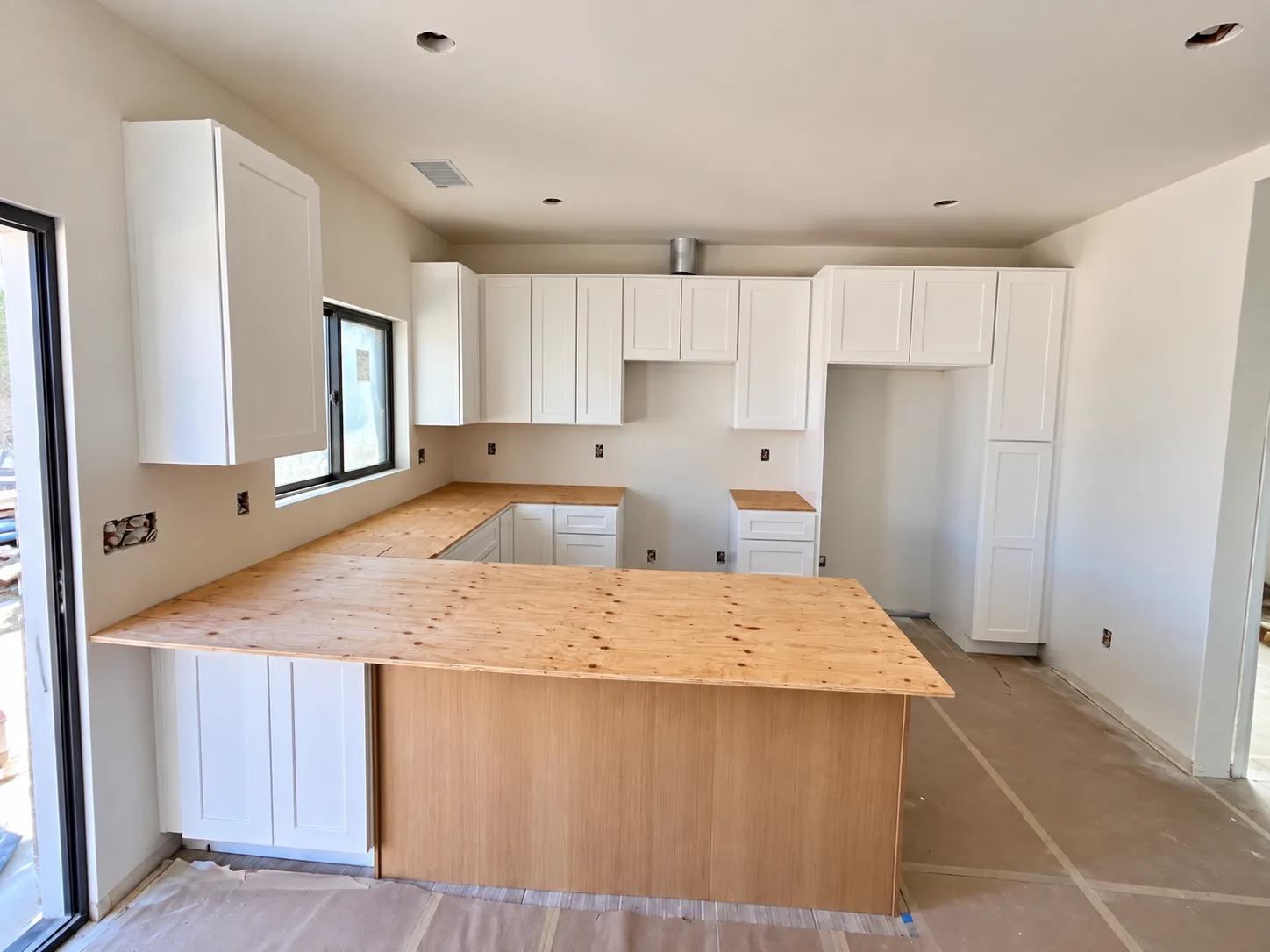
A scope argument starts when two people read the same sentence two ways. “Install kitchen cabinets” means one thing to the person who picked them in a showroom and another thing to the person ordering them. The work gets built, the bill arrives, and only then does it turn out the two of you pictured a different kitchen.
The scope is also what every later document points back to. A change order changes the scope. A progress payment pays for a part of the scope. An inspection checks work the scope describes. If the base description is thin, everything built on it is thin too.
What the law requires
Business and Professions Code section 7159, amended by SB 517 and in effect since January 1, 2026, lists what a California home improvement contract must contain. Three items deal with scope:
- A section with the heading “Description of the Project and Description of the Significant Materials to be Used and Equipment to be Installed,” followed by those descriptions (section 7159(d)(7)).
- A “List of Documents to be Incorporated into the Contract,” where the contract relies on other documents, such as plans or specifications (section 7159(d)(12)).
- A “Note About Extra Work and Change Orders.” It says a change becomes part of the contract once it is written and signed by both parties before the changed work starts, and that it must describe the scope of the change, the cost added or subtracted, and the effect on the schedule of progress payments (section 7159(d)(13)).
The contract itself, and any change to it, must be in writing and signed before the work it covers starts (section 7159(d)). A separate section, 7159.6, says a change order cannot be enforced against the homeowner unless it states the scope of the change, the amount added or subtracted, and the effect on the progress payments or the completion date. The same section says the homeowner may not require extra work without giving written authorization.
What a strong description looks like
CSLB’s consumer guide to home improvement contracts, “Terms of Agreement,” says the contract should be as specific as possible about materials: style, brand, model, quality, quantity, weight, color and size, or any other description that applies. The guide sets out three versions of the same line, from good to poor.
- Cabinets. The strong version gives the quantity, the maker, the wood, the model, the color code, the hinge and hardware model, and points to the plan dimensions. The weak versions say “install maple kitchen cabinets” or simply “install some cabinets.”
- Paint. The strong version names the room per the plan, the paint brand, the color number, the number of coats and how the prep and taping will be done. The weak ones say “paint the entryway blue” or “paint the entry.”
- Faucet. The strong version names the brand, the style and the finish. The weak ones say “replace kitchen faucet, if necessary” or “replace kitchen fixtures.”
The guide also says the contract should include everything agreed, all the way to cleanup and removal of debris, plus any special request, such as keeping certain materials or appliances. If something was promised out loud, CSLB says to get it into the writing.
A worked example: one ADU, line by line
Take our Pasadena ADU project: 850 square feet, two bedrooms, two bathrooms, a laundry room, a full kitchen and a living room. A one-line scope such as “build a two-bedroom ADU per plans” leaves most of the decisions unwritten. Here is how the CSLB approach plays out on a unit like that.
- Start with the plans. Name the plan set and its date, and list it under “Documents to be Incorporated into the Contract.” Then the rooms, sizes and layout are written down once.
- Go room by room. Kitchen, both bathrooms, laundry room, bedrooms, living room. For each one, list what goes in: cabinets, counters, sinks, faucets, tile, lights, appliances.
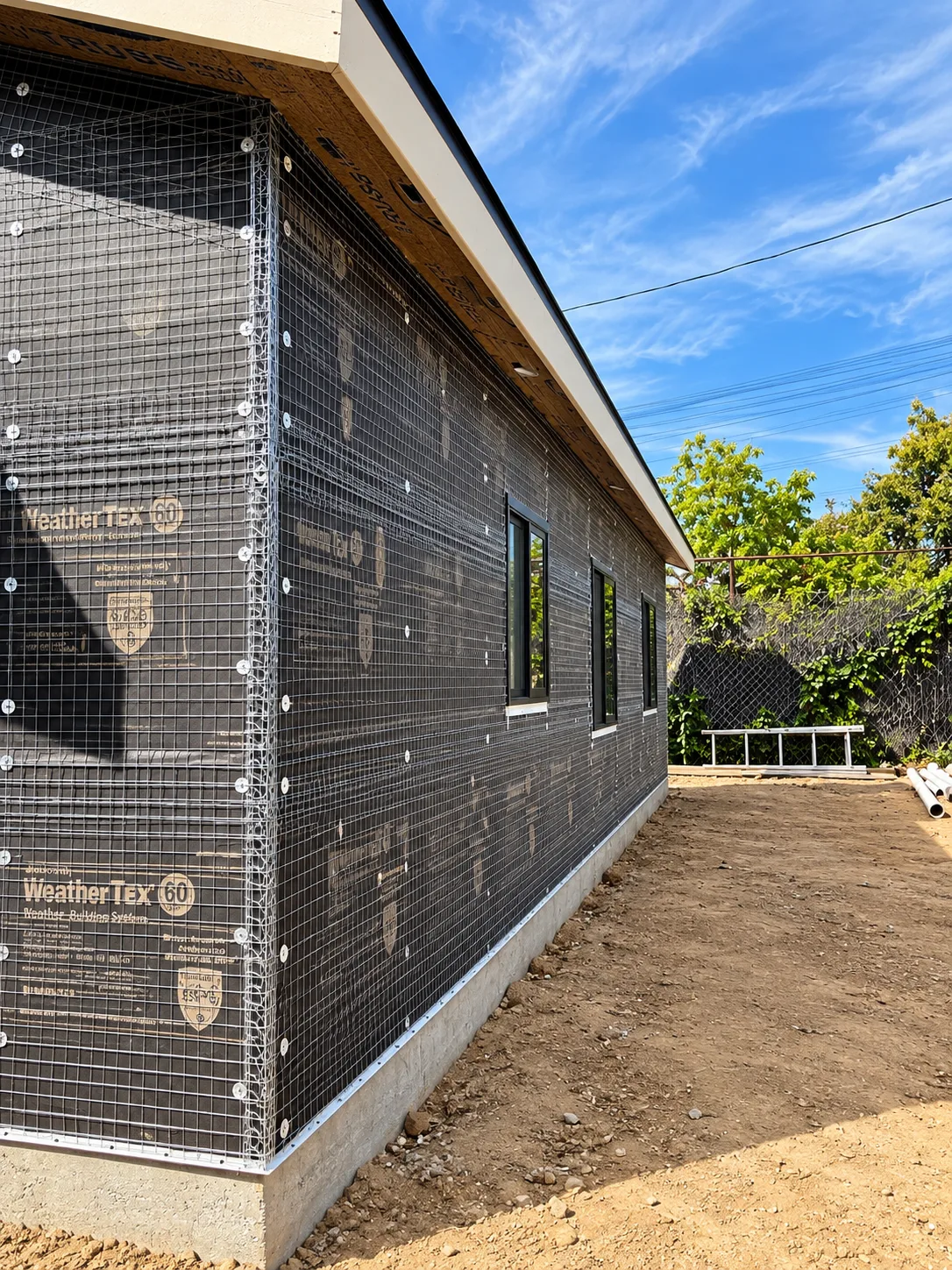
- Name the significant materials. Cabinet style and finish, counter material, tile, flooring, windows and doors, the exterior finish. In the photo above, the walls are wrapped and lathed for stucco. The contract is where the stucco system and the finish coat get named.
- Name the equipment. Water heater, heating and cooling, laundry hookups, any appliance the contract includes.
- Say who supplies what. If you are buying the appliances or the tile yourself, the scope should say so. Then each item is ordered once, by the right person.
- Write down the items that slip through. Permits and who pulls them, utility connections, cleanup and debris removal, anything you asked to keep.
- Flag what is not chosen yet. If the tile or the fixtures are still open, the description should say so, and you should agree how the choice will be recorded once it is made.
When a choice changes after signing, that is a change order, and section 7159.6 lists what it must state. Our article on contract start and finish dates covers how a change order moves the dates.
Warranties belong in the writing too
CSLB’s guide says that if the contractor offers a warranty for labor or materials, get it in writing, with which parts of the work are covered and for how long. It also suggests asking for the manufacturers’ written warranties on materials and appliances the contractor installs. Keep those with the contract.
Checklist before you sign
- Does the contract have the “Description of the Project and Description of the Significant Materials to be Used and Equipment to be Installed” section, and is it filled in?
- Could a stranger read the description and know what your finished project contains?
- Are the plans listed, with a date, under “Documents to be Incorporated into the Contract”?
- Are the significant materials named by type, brand or model, color and quantity where they matter?
- Is the equipment listed?
- Does it say who supplies each item you might buy yourself?
- Does it say who pulls the permits?
- Are cleanup, debris removal and any special requests written in?
- Are the choices still open marked as open, with an agreed way to record them?
- Is every verbal promise now in the writing?
- Does the contract carry the “Note About Extra Work and Change Orders”?
- If a warranty was offered, is it in writing, with what it covers and for how long?
How it works with MAMOS
- One team handles the design, the permits and the build. We prepare the drawings, file the city submittal, answer the plan-check corrections and meet the inspectors.
- We start with a free site visit. After we have seen your property, you get a written scope and quote for your address.
- During the job you get a written update with photos every week.
- A lien release is given with each payment. Our article on paying for an ADU without paying ahead of the work explains why that matters.
- Warranty is set project by project.
- We call back within 15 minutes: 8am to 5pm Monday to Thursday, 8am to 2pm Friday.
Sources (accessed 2026-10-16)
- California Business and Professions Code section 7159 (amended by SB 517, effective January 1, 2026): leginfo.legislature.ca.gov
- California Business and Professions Code section 7159.6: leginfo.legislature.ca.gov
- CSLB, “Terms of Agreement: A Consumer Guide to Home Improvement Contracts” (13P-045/1024): www.cslb.ca.gov
This article explains what the published code and CSLB say. It is not legal advice. Rules change; ask CSLB or an attorney about your own contract.
Questions homeowners ask
What is the scope of work in a construction contract?
It is the written description of the job: what will be built or changed, and the significant materials and equipment that go into it. In California, every home improvement contract must carry a section headed “Description of the Project and Description of the Significant Materials to be Used and Equipment to be Installed.” (B&P Code 7159(d)(7).)
How detailed should the description of work be?
CSLB says as specific as possible: style, brand, model, quality, quantity, weight, color and size, wherever they apply. Its example of a strong line names the cabinet maker, model, color and hardware and points to the plan dimensions, where a weak line says “install some cabinets.” (CSLB, Terms of Agreement.)
Do I have to pay for work that was not in the contract?
Under section 7159.6, a change order cannot be enforced against the homeowner unless it states the scope of the change, the amount added or subtracted, and the effect on the progress payments or the completion date. The same section leaves room for claims based on unjust enrichment, so ask CSLB or an attorney about a specific bill. (B&P Code 7159.6.)
Book the free site visit through the short form at the top of this page (back to the form). More on how we build: ADUs and garage conversions.
Free site visit: (818) 934-0075