Book a free site visit.
Got it.
Rather talk now? Call (818) 934-0075.
A preliminary notice is a letter the law asks subcontractors and suppliers to send the owner early in a job. It tells you who is working on or delivering to your house, and that they keep the right to file a lien if they go unpaid. Getting one is normal on an ADU, a garage conversion or an addition. Keep it, note the date, and use it to collect a lien release before each payment. (Sources: CSLB and California Civil Code section 8202, linked below.)
Who works on a home job
A building job draws on more than one trade. Concrete, framing, plumbing, electrical, roofing, drywall and paint can each come from a different company. Lumber, concrete, windows and fixtures come from suppliers. The direct contractor is the one you signed with. The others work for the direct contractor, and you may never meet them.
California gives each of them a way to get paid if the money stops along the chain: the mechanics lien. CSLB describes it as a hold on your property, recorded with the county recorder. An unpaid lien can lead to a foreclosure action.
Why it goes wrong
The risk sits in the gap between your payment and theirs. You pay the direct contractor. The direct contractor is supposed to pay the trades and the suppliers. If that second payment never happens, CSLB says the homeowner is ultimately responsible, even after paying the direct contractor in full.
CSLB lists what can follow: paying twice for the same work, a lien on the title that gets in the way of a refinance or a sale, and in the worst case foreclosure. The paperwork below exists to close that gap.
What the preliminary notice says
Civil Code section 8202 sets the contents. The notice gives a general description of the work, an estimate of its total price, and a boxed statement headed “Notice to Property Owner” in bold type. That statement warns that a lien may be placed on the property even if you have paid your contractor in full. It suggests asking your contractor for a signed release from the sender before you pay.
The same statement also says the notice “is not intended to reflect upon the financial condition of the contractor.” A notice is routine. It means the sender is keeping its rights.
Who sends one, from CSLB:
- Subcontractors and material suppliers who may need to file a lien.
- The direct contractor and laborers are exempt.
- It can come in person or by certified, registered or first-class mail, before the work or delivery starts and up to 20 days after.
- A sender who skips the notice loses the right to file a lien. A late notice covers only work done from 20 days before it was delivered.
Lien releases: four forms
A lien release is the signed paper that says a trade or supplier has been paid for a stretch of the work. CSLB is clear on two points. No release binds anyone unless the claimant signs and delivers it. And paying your contractor, or getting the contractor’s own release, does not prove the subcontractors and suppliers were paid.
The forms follow Civil Code sections 8132 to 8138. There are four:
- Conditional release on a progress payment. Signed before a progress payment. It only takes effect once the claimant is paid.
- Unconditional release on a progress payment. Signed after the claimant received the progress payment.
- Conditional release on final payment. Signed before the last payment, binding once there is proof of payment.
- Unconditional release on final payment. Signed after the final payment was received.
Proof of payment for a conditional release, per CSLB, is the claimant’s endorsement on a check the bank has paid, or a written acknowledgment from the claimant.
The order CSLB recommends: get the signed conditional release before you pay, and the unconditional release after. The direct contractor is required to collect those signatures for you. Check that the release is signed by the company that did the work or sent the material. By law, you may hold the next payment until you have the unconditional releases for the last one.
CSLB names one more tool: the joint check, made out to the contractor and the subcontractor or supplier together, so both have to endorse it.
When the job is finished
After completion you can record a Notice of Completion with the county recorder. CSLB says owners have 15 days from completion to record it. It cuts the time to record a lien from 90 to 60 days for the direct contractor, and from 90 to 30 days for subcontractors and suppliers. Section 8202 adds that the owner of a home with four or fewer units does not have to mail copies of it to the contractor and the senders of preliminary notices.
If a lien does land on the title, CSLB has a checklist: was the preliminary notice on time, was the lien recorded on time, and was a court action filed within 90 days of recording. An attorney can tell you whether a specific lien holds up.
Checklist for the paperwork
- Ask who the subcontractors and main suppliers will be, and check each license on cslb.ca.gov.
- Look for a payment schedule tied to stages of the work in the contract.
- Keep a folder for every preliminary notice, with the date it arrived.
- Match each notice to a trade or supplier on the job.
- Before each payment, ask for conditional releases from everyone owed for that stage.
- After each payment, collect the unconditional releases.
- Check the name on each release against the notice it answers.
- Hold the next payment until the last round of unconditional releases is in.
- Before the final payment, collect the final releases from every company that sent a notice.
- Ask the county recorder about the Notice of Completion when the job is done.
For what the contract has to say about subcontractors, see our article on start and finish dates in the contract. For tying payments to work in place, see how to pay for an ADU without paying ahead of the work.
A real job, stage by stage
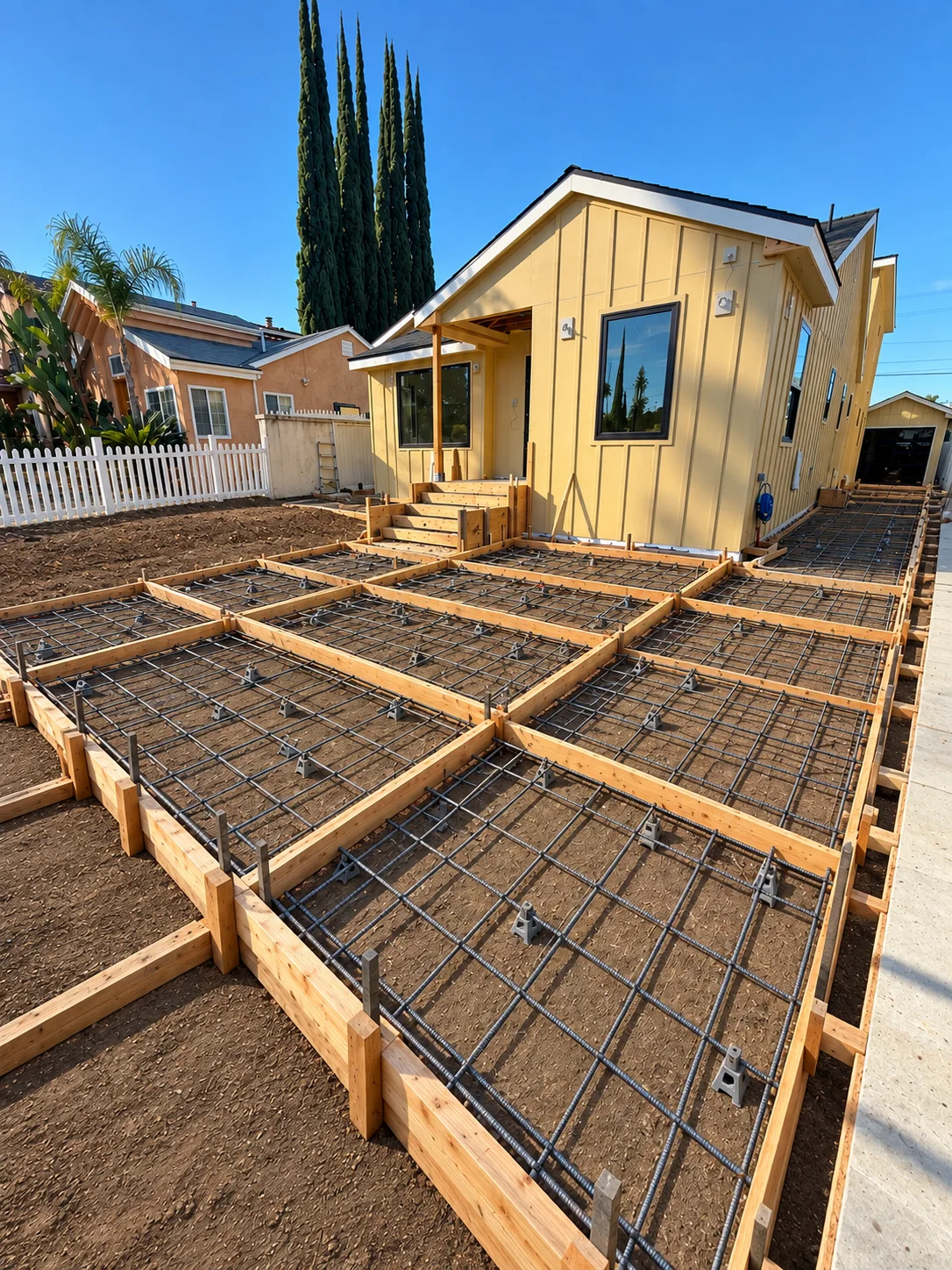
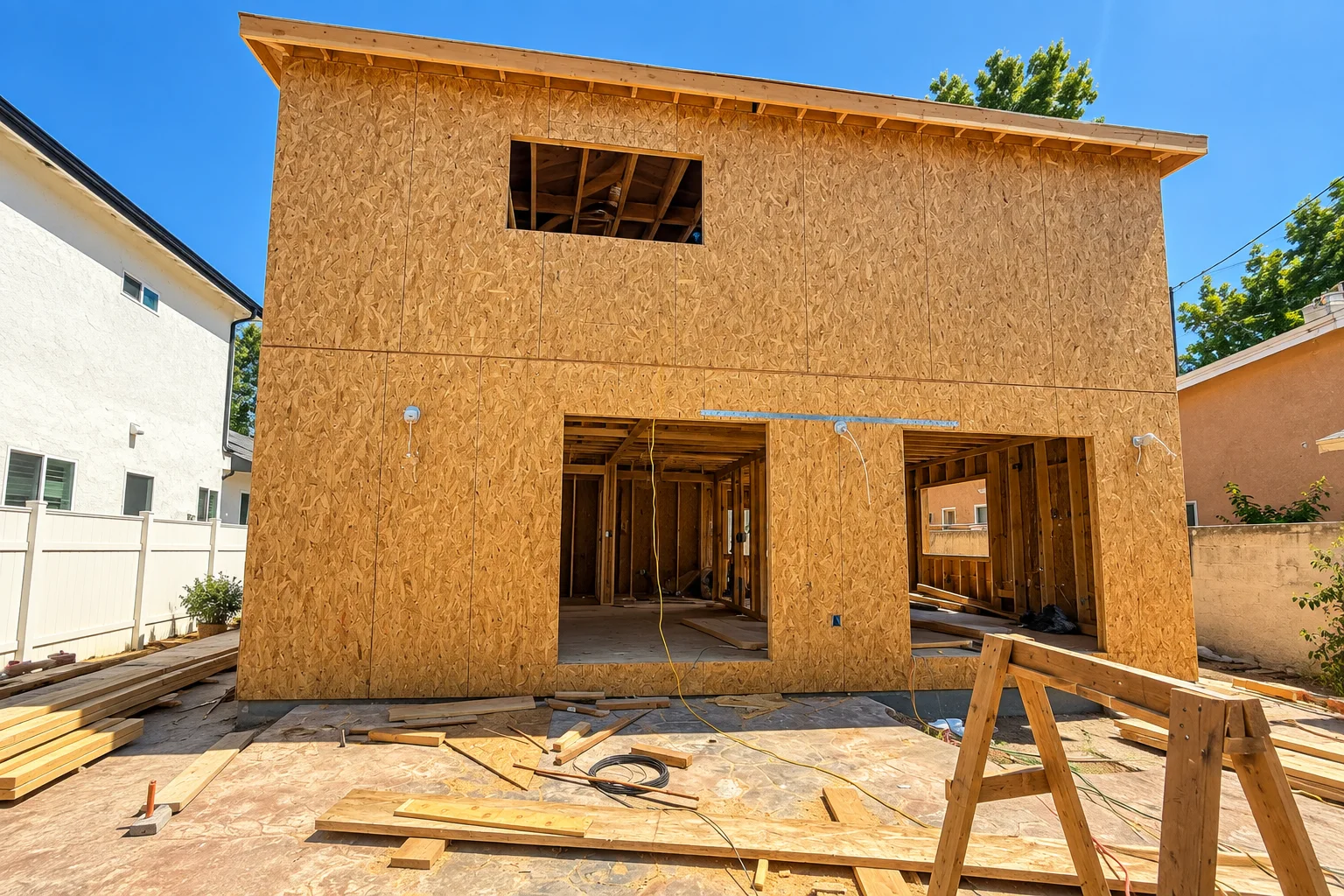
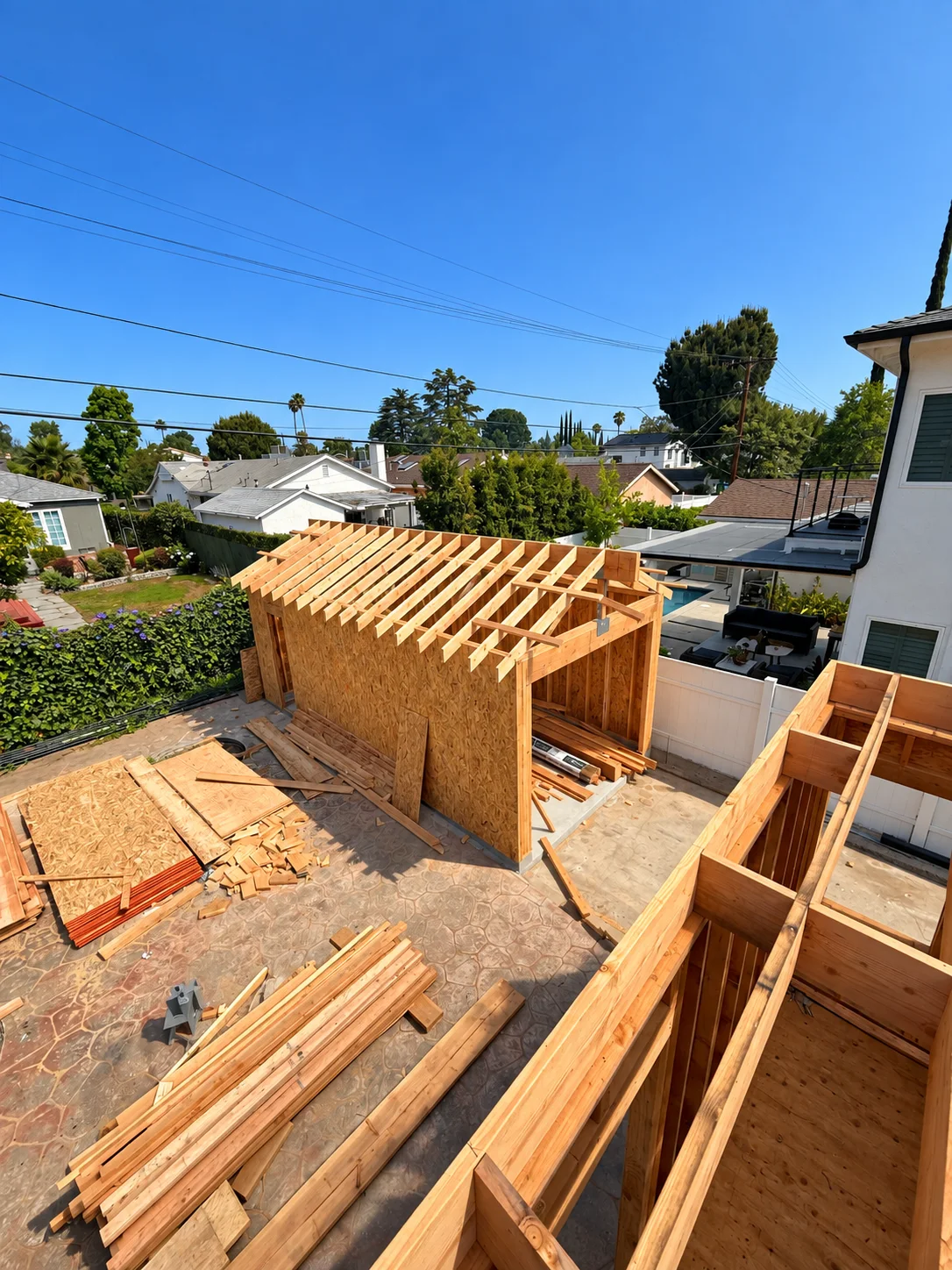
The rear addition we built in Encino shows how many hands touch one job. Footings and rebar came first, with forms set before the concrete. Then floor framing, walls framed and sheathed, and the roof framing. Each stage brings its own crew or its own deliveries, so each one is a point where a notice can arrive and a release should follow the payment.
How it works with MAMOS
- A lien release is given with each payment.
- The payment schedule is agreed with each client before the contract is signed.
- We start with a free site visit. After we have seen your property, you get a written scope and quote for your address.
- One team handles the design, the permits and the build. We prepare the drawings, file the city submittal, answer the plan-check corrections and meet the inspectors.
- During the job you get a written update with photos every week.
- We call back within 15 minutes: 8am to 5pm Monday to Thursday, 8am to 2pm Friday.
Sources (accessed 2026-11-02)
- CSLB, Understanding Mechanics Liens: What is a Mechanics Lien: www.cslb.ca.gov
- CSLB, How to Prevent a Mechanics Lien: www.cslb.ca.gov
- CSLB, Conditional and Unconditional Waiver and Release Forms: www.cslb.ca.gov
- CSLB, What if a Mechanics Lien is Filed on Your Property: www.cslb.ca.gov
- California Civil Code section 8202: leginfo.legislature.ca.gov
This article explains what the published rules say. It is not legal advice. Rules change; ask CSLB or an attorney about your own job.
Questions homeowners ask
Does a preliminary notice mean my contractor is behind on payments?
The notice is a routine step that keeps the sender’s lien rights. The statutory text printed on it says it is not intended to reflect on the contractor’s financial condition. Keep it and ask for that sender’s release before each payment. (Civil Code 8202.)
Will I get a preliminary notice from my own contractor?
The direct contractor and laborers are exempt. Subcontractors and material suppliers who may need to file a lien send one, before their work starts or up to 20 days after. (CSLB, How to Prevent a Mechanics Lien.)
What is the difference between a conditional and an unconditional lien release?
A conditional release is signed before a payment and binds only once the payment clears. An unconditional release is signed after the claimant was paid. CSLB suggests the conditional one before you pay and the unconditional one after. (CSLB, Waiver and Release Forms.)
Book the free site visit through the short form at the top of this page (back to the form). More on how we build: ADUs and garage conversions.
Free site visit: (818) 934-0075